There are hundreds of floors on the market and most of them will technically “work” in your room. Choosing well is about matching the floor to how you actually live, not just how it looks in a photo.
Here is the same five-question framework we use with customers across Cape Town before we ever quote a job.
1. Which room is it, and how much moisture?
Moisture is the first filter because it rules options in or out.
- Kitchens, bathrooms, laundries: go waterproof: LVT, SPC or vinyl. Avoid laminate and solid wood.
- Living areas, bedrooms, passages: almost anything works, so let traffic and look decide.
- Ground floors on a slab: watch for rising damp. We moisture-test before laying anything, see floor preparation below.
2. How much traffic will it take?
Be honest about pets, kids and foot traffic. This decides the wear layer (for vinyl) or AC rating (for laminate) you need.
| Traffic | Laminate | Vinyl wear layer |
|---|---|---|
| Quiet home / bedrooms | AC3 | 0.3 mm |
| Busy family home | AC4 | 0.4–0.5 mm |
| Commercial / very busy | AC5 | 0.55 mm |
More on this in Understanding wear layers.
3. What is your subfloor like?
Your existing floor quietly decides a lot. A flat, sound screed suits glue-down LVT. An older, slightly uneven floor is better suited to floating SPC or laminate, which bridge minor imperfections. If the base is poor, budget for screeding or self-levelling, skipping it is the number-one cause of floors failing early.
4. What is your budget, all in?
Compare floors on the installed price, not just the per-square-metre sticker. Three things move the number:
- The product, laminate is usually the most affordable, engineered wood the most premium.
- Subfloor prep, levelling, moisture barriers, removing old flooring.
- Waste, flooring is sold in full boxes, and patterns like herringbone need more offcuts.
Our flooring calculator handles the full-box maths for you so there are no surprises.
5. What look are you after?
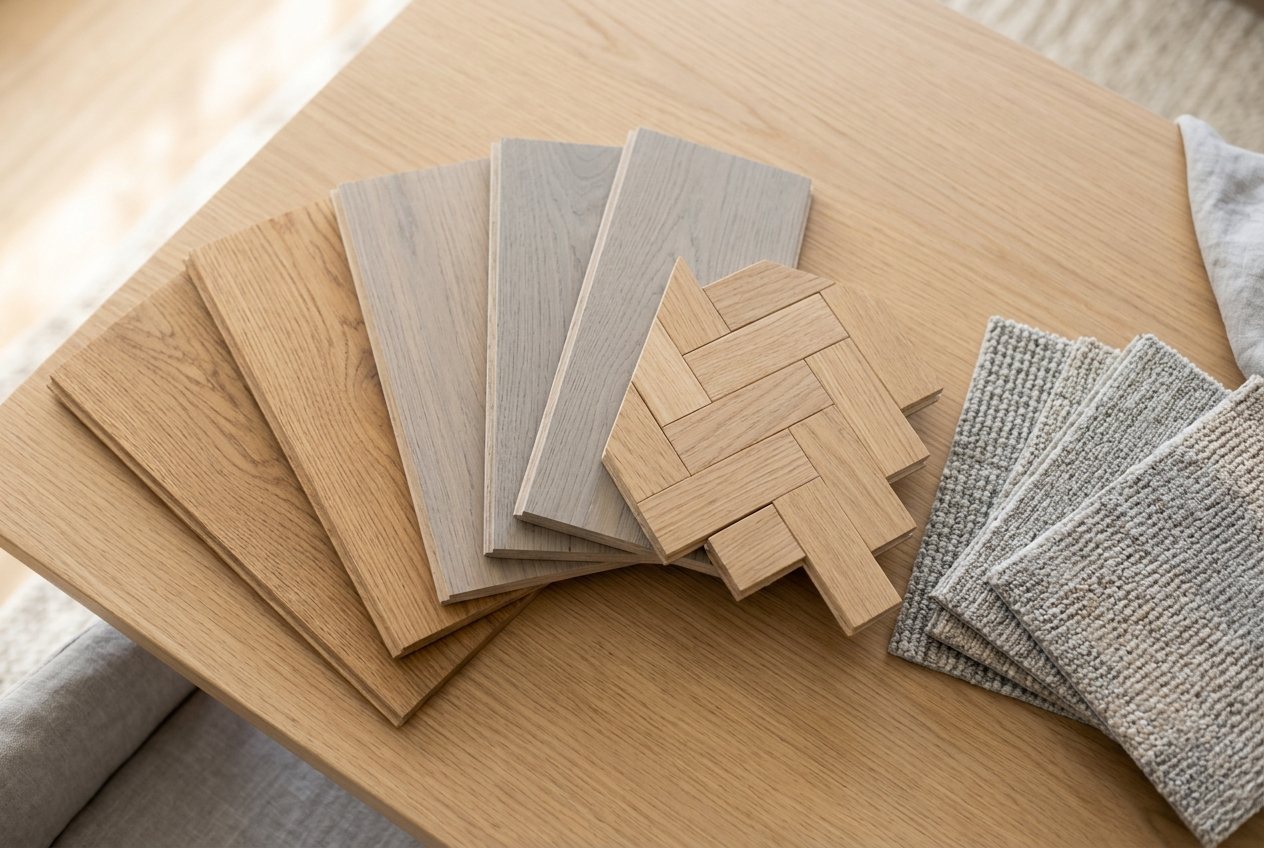
Only once the practical filters are applied does it come down to taste, plank width, colour, matte or satin, straight-lay or herringbone. Warm oaks make a room feel cosy; pale greys feel modern and open; herringbone adds a designer edge. Because you have already narrowed by room, traffic, subfloor and budget, you can now choose the look with confidence.
Still weighing it up? Send us your rooms and we will recommend the right product and give you a clear, free quote.
Frequently asked questions
What is the most durable flooring for a busy household?
For a busy home with kids and pets, look at SPC or LVT with a 0.5-0.55 mm wear layer, or AC4/AC5 laminate. These handle scratches and heavy foot traffic well. Waterproof options like SPC and LVT also cope with spills and accidents.
What flooring is best for kitchens and bathrooms?
Waterproof flooring: LVT, SPC or sheet vinyl. Laminate and solid wood should be avoided in permanently wet areas because moisture can cause swelling. SPC and LVT give a realistic wood look while staying fully waterproof.
Do I really need to prepare the subfloor first?
In almost all cases, yes. A flat, dry, sound subfloor is what makes a floor last. Skipping preparation is the most common reason floors fail early, with lifting, gaps or an uneven finish. We always assess and, where needed, screed or self-level before installing.
How do I know how much flooring to order?
Measure the area in square metres, add a waste allowance (usually 5-10%, more for herringbone), then round up to full boxes since flooring is sold by the box. Our online flooring calculator does this automatically for each product.
Not sure which floor is right for your space?
Send us your rooms and we’ll recommend the right product and give you a clear, free quote, supply-only or fully installed.
Get a Free Quote ↗