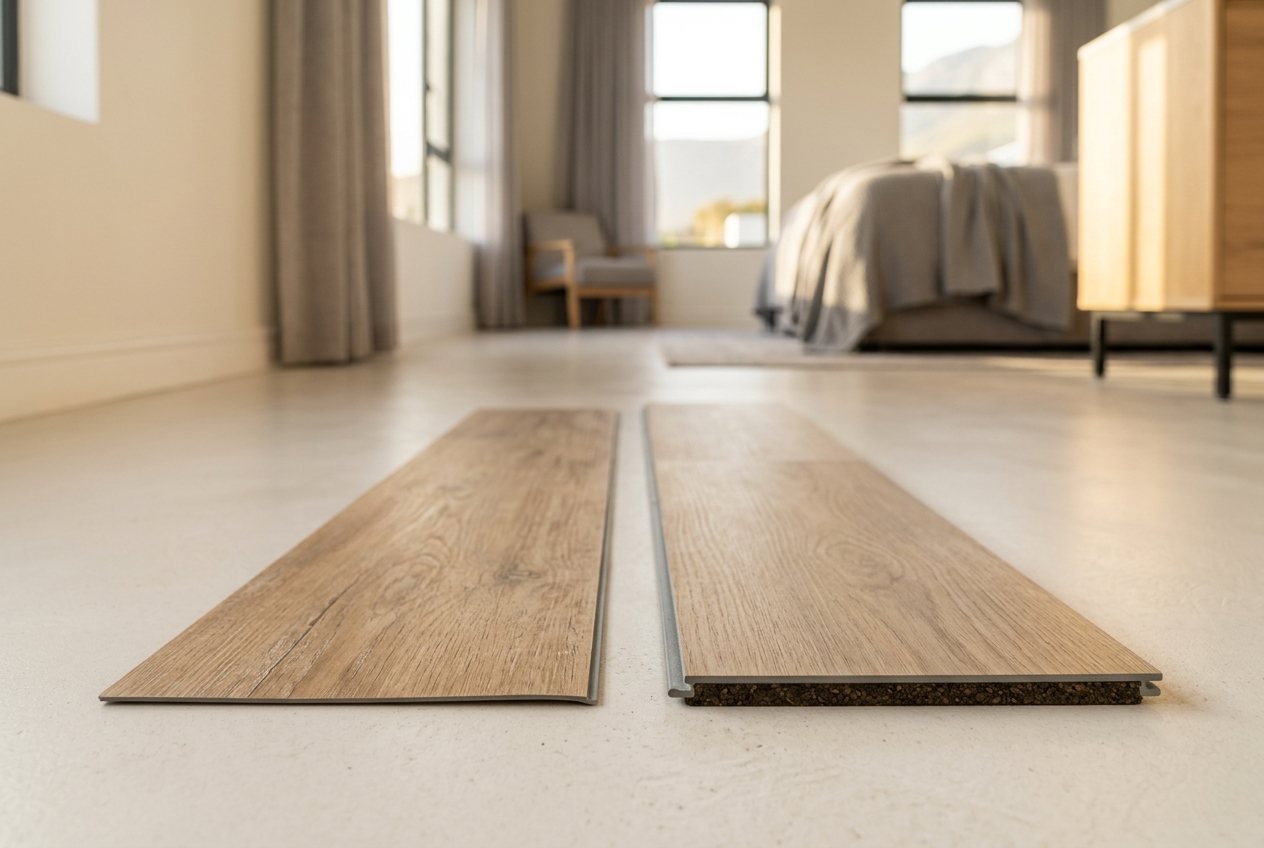
In the showroom they can look almost identical, the same realistic wood planks, the same waterproof promise. But underneath, LVT and SPC are built differently, and that difference decides which one belongs in your home or business.
At Imbiza Flooring we fit both every week across Cape Town, so here is the honest, no-jargon breakdown of how they compare and how to choose.
What is LVT?
LVT (Luxury Vinyl Tile) is a flexible vinyl plank or tile that is glued down onto a smooth, level screed. Because it is thin and flexible, it hugs the floor and feels solid underfoot, but it needs a well-prepared subfloor to look its best, since any bumps below will eventually show through.
It is quiet underfoot and fully waterproof, available in a huge range of decors. Because it is thin and bonded straight to the screed, it gives a low, seamless finish, but it also takes on the temperature of the slab beneath, so it can feel cool. Our Aspen Project Range and Aspen Lifestyle are popular LVT choices.
What is SPC?
SPC (Stone Plastic Composite) is a rigid plank with a solid stone-composite core. Instead of being glued, the planks click together and float over the subfloor. That rigid core means SPC bridges minor imperfections far better than LVT, so it is more forgiving over an imperfect subfloor and quicker to install.
SPC is also fully waterproof and tends to carry a thicker wear layer. Many SPC planks come with an attached acoustic backing, which can make them a touch softer, warmer and quieter underfoot than glued-down LVT. See our Aspen Rigid Core or the premium Como Royal for an idea of the range.
LVT vs SPC at a glance
| LVT | SPC | |
|---|---|---|
| Core | Flexible vinyl | Rigid stone composite |
| Installation | Glued to the screed | Floating click system |
| Subfloor prep | Needs a very flat, level base | More forgiving of minor bumps |
| Underfoot feel | Thin, firm, bonded to the slab | Slightly softer & quieter (attached pad) |
| Waterproof | Yes | Yes |
| Best for | Homes & showrooms with a good screed | Fast installs & imperfect subfloors |
So which should you choose?
There is no universal winner, it depends on your subfloor and how the room is used.
- Choose LVT if you want the lowest-profile, most seamless finish and your subfloor is already flat (or you are happy to have it screeded and self-levelled first). It is our go-to for a premium residential feel.
- Choose SPC if you need a fast, low-fuss install, you are working over an older or slightly uneven floor, or you want a thicker wear layer for a busy household or commercial space.
What about cost?
Prices overlap heavily: a premium LVT can cost more than an entry-level SPC and vice versa. The bigger cost difference is often the subfloor preparation: LVT may need self-levelling first, while SPC can sometimes float straight over the existing floor. Use our flooring calculator to work out how many boxes your room needs, then request a free quote and we will price the full job, prep included.
Frequently asked questions
Is SPC better than LVT?
Neither is universally better. SPC is more forgiving over uneven subfloors and installs faster because it floats and clicks together. LVT gives a low, seamless bonded finish but needs a very flat, glued base, and being thin it can feel cool as it takes on the slab temperature. The right choice depends on your subfloor and how the room is used.
Is LVT and SPC flooring really 100% waterproof?
Yes, both are fully waterproof through the plank itself, which is why they suit kitchens, bathrooms and laundries. Water can still reach the subfloor through the edges and joints, so spills should still be wiped up, but the flooring will not swell or warp like laminate can.
Can SPC be installed over existing tiles?
Often yes. Because SPC floats and its rigid core bridges small imperfections, it can go over existing hard floors if they are sound and reasonably level. We always assess the subfloor on site first and advise whether prep is needed.
Which lasts longer, LVT or SPC?
Lifespan is driven by the wear layer thickness rather than LVT versus SPC. A thicker wear layer (0.5-0.55 mm) lasts longer under heavy traffic regardless of the core type.
Not sure which floor is right for your space?
Send us your rooms and we’ll recommend the right product and give you a clear, free quote, supply-only or fully installed.
Get a Free Quote ↗