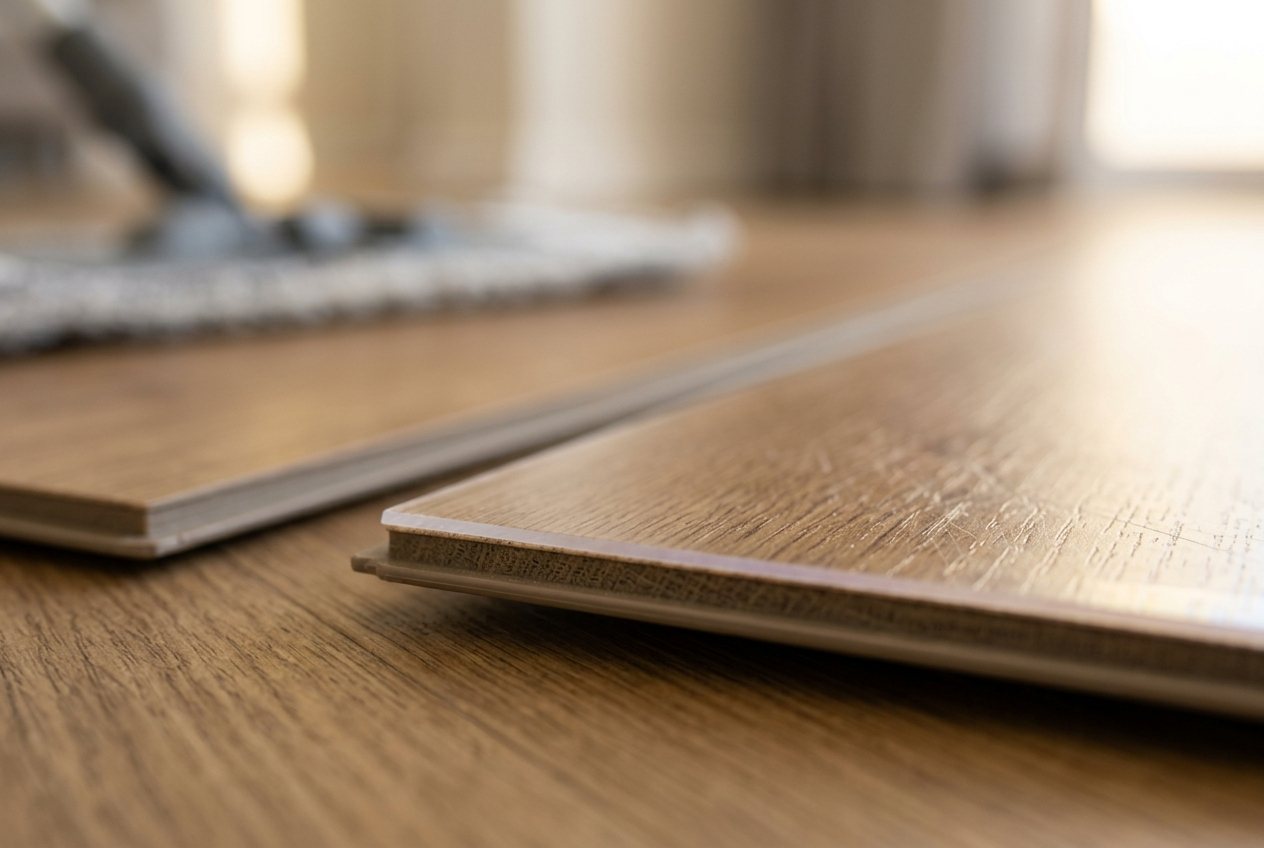
If you only understand one flooring spec, make it this one. The wear layer: not the total thickness, is what decides how long your floor looks good and how much traffic it can take.
What is a wear layer?
The wear layer is the clear protective top coat that sits above the printed decor on a vinyl or laminate floor. Everything you walk on, drag furniture across and clean happens on this layer. The decor (the wood or stone look) sits just beneath it, protected. Once the wear layer is gone, the pattern wears through, and that cannot be repaired, only replaced.
So a thicker wear layer means more years of good looks, especially under heavy traffic.
Vinyl: measured in millimetres
On LVT and SPC, the wear layer is measured in millimetres. This is the number that matters most when comparing two vinyl planks:
| Wear layer | Best suited to |
|---|---|
| 0.2 mm | Bedrooms and low-traffic rooms |
| 0.3 mm | Everyday living areas and busy homes |
| 0.4–0.5 mm | Heavy home use and light commercial |
| 0.55 mm+ | Shops, offices and high-traffic commercial |
You will see this on every product page, for example our Aspen Premium Range carries a 0.55 mm commercial-grade wear layer, while an entry-level range sits at 0.2–0.3 mm.
Laminate: measured by AC rating
Laminate does not use a millimetre wear layer, it uses an AC rating (Abrasion Class), a standardised toughness score from AC1 to AC5:
- AC3, residential, good for bedrooms and general living areas.
- AC4, heavy residential and light commercial; ideal for busy family homes and hallways.
- AC5, commercial-grade, for the busiest spaces.
For most homes AC4 is the sweet spot. Ranges like Krono Altitude (AC5) go a step further for high-traffic areas.
Engineered wood: the veneer is the wear layer
On engineered wood, the “wear layer” is the real timber veneer on top: the “3” in a 14/3 mm board means a 3 mm oak top layer. The thicker it is, the more times the floor can be sanded and refinished over its life: a 3 mm veneer can be sanded two to three times, a 4 mm veneer three to four. It is what lets a good engineered floor last for decades.
How to use this when you shop
- Decide your traffic level first (quiet, busy, or commercial).
- Match it to a wear layer (vinyl) or AC rating (laminate) from the tables above.
- Only then compare looks and price, between products with the same rating.
Every Imbiza product page lists the wear layer or AC rating up front, so you can compare fairly. When you are ready, calculate your area and request a free quote.
Frequently asked questions
What wear layer do I need for a house?
For a normal home, a 0.3 mm wear layer on vinyl (or AC4 laminate) is usually plenty. For a busy family home with pets, step up to 0.4-0.5 mm vinyl or AC4/AC5 laminate. Commercial spaces should use 0.55 mm vinyl or AC5 laminate.
Is a thicker floor always more durable?
No. Total thickness affects how stable and solid a floor feels, but the wear layer determines how long the surface lasts. A thinner plank with a thicker wear layer will outlast a thicker plank with a thin wear layer under the same traffic.
What does AC4 mean in laminate?
AC4 is an Abrasion Class rating for laminate, indicating it is suited to heavy residential and light commercial use. It handles busy living areas, hallways and homes with pets. AC3 is for lighter residential use and AC5 is commercial-grade.
What is the wear layer on engineered wood?
On engineered wood the wear layer is the real timber veneer on top. In a 14/3 mm board, the 3 refers to a 3 mm oak veneer. A thicker veneer can be sanded and refinished more times, which is what allows a quality engineered floor to last for decades.
Not sure which floor is right for your space?
Send us your rooms and we’ll recommend the right product and give you a clear, free quote, supply-only or fully installed.
Get a Free Quote ↗