An engineered wood floor is real timber, and it rewards being treated like it. Look after it simply and it will stay beautiful for decades, and unlike vinyl or laminate, it can be brought back to life when it eventually looks tired.
Everyday cleaning
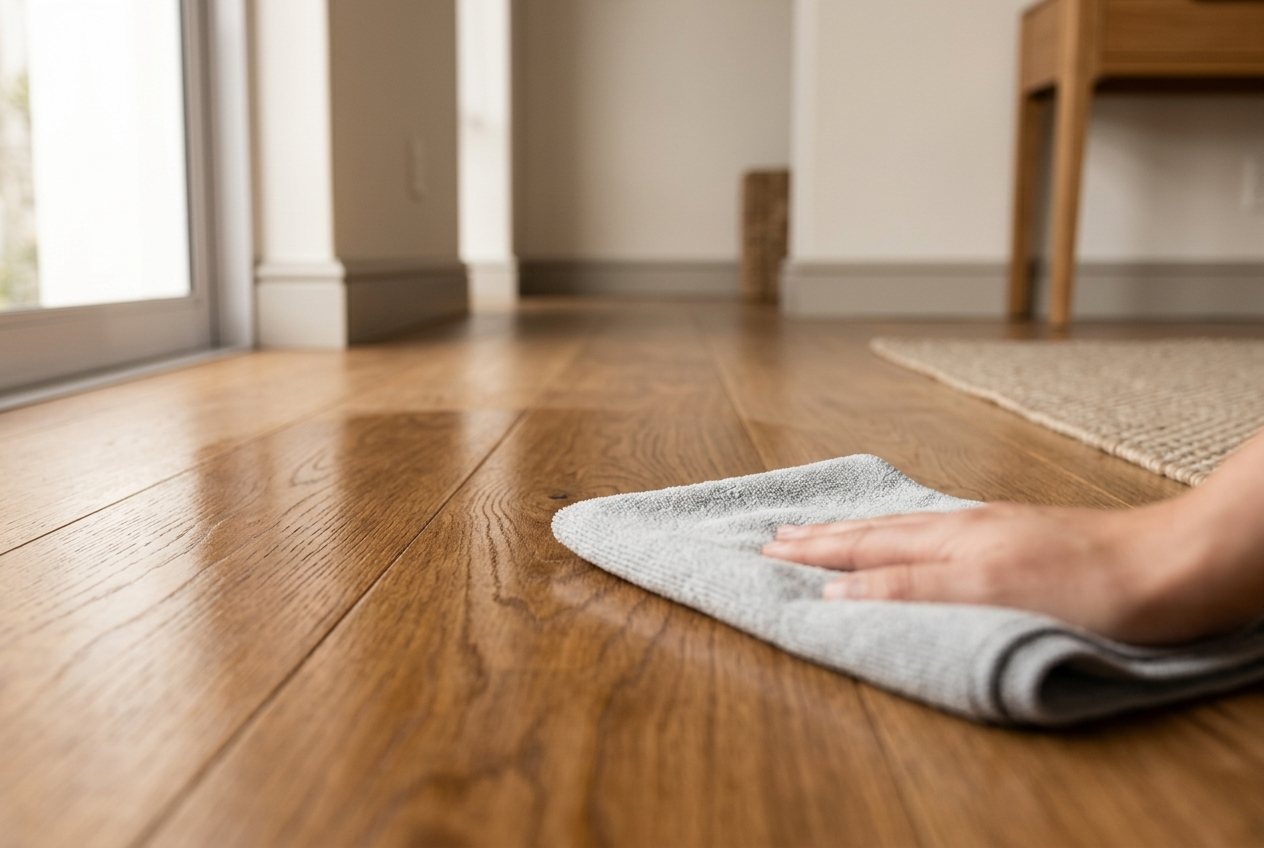
Keep it simple and keep it dry. Vacuum with a soft brush head or sweep regularly to lift grit before it scratches, then clean with a barely-damp microfibre mop and a cleaner made specifically for wood floors. Wipe spills as they happen rather than letting them sit. That is genuinely most of the job.
What to avoid
- Steam mops. The heat and forced moisture are pushed into the joints and finish. This is the fastest way to damage any wood floor.
- Standing water. Never flood the floor or leave a wet mop on it. Damp is wood's enemy.
- Oil soaps, wax and all-purpose sprays. They build up a dull film and can interfere with future re-coating.
- Abrasive pads. They scratch the finish. Use soft cloths and pads only.
Protecting the finish
Most of a floor's wear is preventable. Put doormats at every entrance to trap grit, fit felt pads under all furniture legs and lift rather than drag heavy items, use rugs in high-traffic runs, and keep pet claws trimmed. Direct sun over years can lighten or shift the tone, so blinds or sheers help keep the colour even.
Keep humidity steady
Wood moves a little with humidity, and Cape Town's coastal swings are exactly why engineered wood is the smart choice here: its cross-bonded layers are far more stable than solid planks. You can help it further by keeping indoor humidity reasonably steady and avoiding extremes, which keeps boards flat and gaps consistent through the seasons.
Refreshing a tired floor
This is engineered wood's trump card. When the finish dulls or the floor picks up years of wear, it can be renewed rather than replaced:
- Buff and re-coat: a light abrasion and a fresh coat of sealer restores the finish without a full sand. Ideal for thinner veneers.
- Sand and re-seal: boards with enough timber wear layer can be sanded back to bare wood and re-sealed or re-oiled, coming up like new. We finish with quality systems such as WOCA oils and hardwax for a natural, durable result.
Our sand and seal service does exactly this, and it is a fraction of the cost and disruption of a new floor. See it in action at Steenberg Golf Estate.
| How often | Do this |
|---|---|
| As needed | Wipe spills; mats at the doors |
| Weekly | Vacuum or sweep; barely-damp wood-cleaner mop |
| Yearly | Check felt pads; assess high-traffic wear |
| Long term | Buff & re-coat, or sand & re-seal |
Have an Imbiza engineered floor? Ask us for the exact care and re-coat schedule for your product.
Frequently asked questions
How do I clean an engineered wood floor?
Vacuum with a soft brush head or sweep to lift grit, then clean with a barely-damp microfibre mop and a cleaner made for wood floors. Never use a steam mop, never let water pool, and avoid oil soaps, wax and all-purpose sprays that leave a film.
Can an engineered wood floor be sanded and refinished?
Yes, within limits. Engineered boards have a real timber wear layer, and as long as that veneer is thick enough they can be sanded back and re-sealed like solid wood. Thinner boards can still be lightly buffed and re-coated to refresh the finish rather than fully sanded.
Is engineered wood a good choice in humid Cape Town homes?
Yes. Its layered, cross-bonded construction is far more stable than solid wood, so it copes better with the humidity swings on the coast. Keeping indoor humidity reasonably steady and wiping spills quickly keeps it flat and looking good for decades.
Floor looking tired, or planning a new one?
We supply and install engineered wood, and bring existing floors back with a professional sand and seal. Tell us about your space for a clear, free quote.
Get a Free Quote ↗