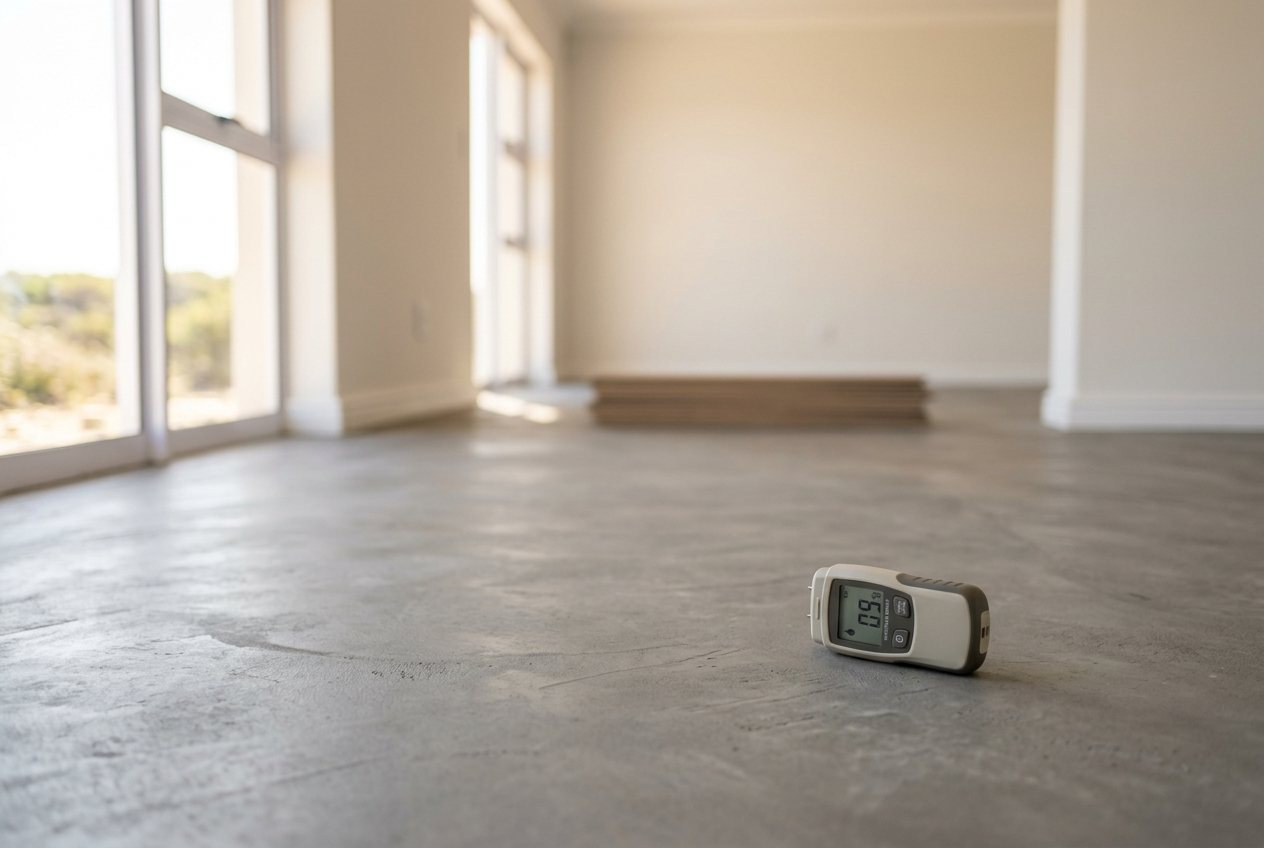
Cape Town gives floors a workout: wet winters, coastal humidity, dry summer heat and plenty of ground-floor slabs. Get moisture wrong and even the best floor will fail. Get it right and almost anything lasts.
Where the moisture comes from
- Rising damp through ground-floor concrete slabs, especially in older homes without an effective damp-proof membrane.
- New screeds that look dry on top but still hold construction moisture deep down.
- Coastal humidity that swings through the seasons and moves natural materials like wood.
- Wet-winter spikes and poorly ventilated rooms that keep subfloors damp.
Why it matters so much
Moisture from below is relentless. It breaks down adhesives so glued floors lift, and it swells the cores of laminate and solid wood. Crucially, a “waterproof” floor is not the same as a moisture-proof installation, SPC and LVT won’t swell, but if damp destroys the adhesive or is trapped beneath, the floor still fails.
How we handle it
Moisture testing first
We test the subfloor before laying anything. If it is too wet, we deal with the cause rather than burying the problem, laying regardless simply guarantees a callback.
Damp-proof membranes & barriers
Where needed, we install a moisture barrier or use a surface damp-proof membrane so ground moisture can’t reach the floor or its adhesive.
Letting screeds dry
Fresh screed needs time, rushing it traps moisture under the new floor. We advise realistic drying times as part of the plan, and prepare properly (see floor preparation).
Which floors cope best with moisture?
| Floor | Moisture tolerance |
|---|---|
| SPC / LVT / sheet vinyl | High: won’t swell (still needs a dry, prepped base) |
| Laminate | Low: core can swell; water-resistant ranges help |
| Engineered wood | Moderate: far more stable than solid wood |
| Solid wood | Sensitive: moves with humidity |
Worried about damp in your space? Book a free on-site assessment and we’ll test before we recommend anything.
Frequently asked questions
Does waterproof flooring solve damp problems?
No. Waterproof floors like SPC and LVT resist spills from above and will not swell, but they do not stop damp rising from the slab below. Ground moisture can still break down adhesive or become trapped, so testing and a moisture barrier are still needed.
Why does a new screed need to dry before flooring?
Fresh screed holds a lot of construction moisture that can look dry on the surface while still being wet underneath. Laying a floor too soon traps that moisture, which can lift adhesives and swell timber. Allowing proper drying time prevents early failure.
What flooring is best for a damp-prone ground floor?
Waterproof options like SPC, LVT or sheet vinyl cope best because they will not swell, but the installation still needs moisture testing and, where required, a damp-proof membrane. We assess the slab first and prepare it correctly before laying.
How do you check for moisture before laying a floor?
We carry out subfloor moisture testing before installation. If readings are too high, we address the cause, install a moisture barrier or allow more drying time rather than laying over a damp base, which would cause the floor to fail.
Not sure which floor is right for your space?
Send us your rooms and we’ll recommend the right product and give you a clear, free quote, supply-only or fully installed.
Get a Free Quote ↗