Most floor failures do not start at the surface. They start underneath, with damp rising out of the concrete. A moisture barrier is the quiet, invisible layer that stops it, and on a lot of jobs it is the single most important thing we do.
What a moisture barrier actually is
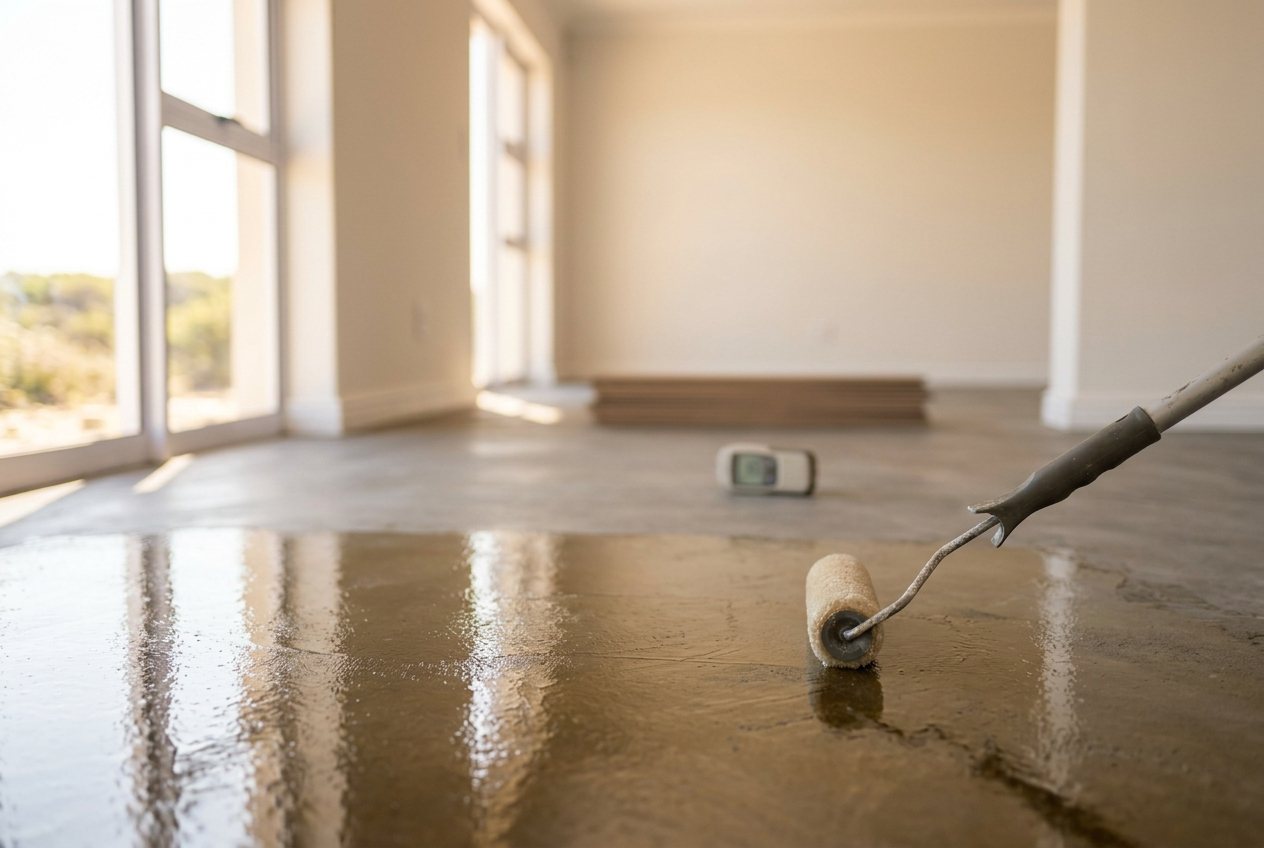
A moisture barrier, sometimes called a surface damp-proof membrane or DPM, is a coating we apply straight onto the concrete slab to seal it. It is usually a two-part epoxy that soaks into and closes off the surface so moisture in the slab cannot travel up into your new floor. We often broadcast a sand aggregate into the wet epoxy, which gives the next layer a mechanical key to grip, so the screed and covering bond properly.
When your floor needs one
Not every floor needs a barrier, but a lot in Cape Town do. The usual triggers are:
- Ground-floor slabs where the original under-slab DPM is missing, damaged or unknown.
- New or fast-tracked screeds that have not fully dried, which can take weeks per layer.
- Coastal and damp sites, where humidity and a high water table push moisture upward.
- Commercial floors like clinics, shops and schools, where a failure is costly and disruptive.
A quick moisture test settles it. We would rather test and be sure than gamble a whole floor on a guess.
How we do it
The order matters. First we prepare and clean the slab and test it for moisture. Then we prime and apply the epoxy moisture barrier (systems such as a VAPORiTe-type DPM), broadcasting sand into the wet coat to key it. Once cured, we lay a self-levelling screed to bring the floor dead-flat, and only then does the floor covering go down onto a base that is sealed, sound and level.
| Step | Why it matters |
|---|---|
| Moisture test | Confirms whether a barrier is needed |
| Prime & epoxy DPM | Seals the slab against rising damp |
| Sand broadcast | Keys the surface for the next layer |
| Self-levelling screed | Creates a flat, sound base |
| Floor covering | Bonds to a sealed, level surface |
What happens if you skip it
Damp finds the weakest point. It gets into the adhesive and the covering: vinyl and LVT bubble, lift and de-bond, wood swells and cups, and glue simply lets go. The frustrating part is the timing, because it often shows up months after the floor looked perfect. By then the only honest fix is to lift the floor and redo it with the barrier that should have been there. A moisture barrier is a small part of the budget that protects the whole job.
Not sure if your slab needs sealing? Ask us for a free measure and moisture check and we will tell you straight.
Frequently asked questions
What is a moisture barrier for flooring?
A moisture barrier, or surface damp-proof membrane, is a coating applied to a concrete slab to stop rising damp coming up into the new floor. It is usually a two-part epoxy that seals the surface, often with a sand aggregate broadcast in to key the next layer, so screeds and floor coverings bond and stay sound.
Do I need a moisture barrier on my floor?
You need one when the slab is showing or likely to carry moisture: ground-floor concrete without an intact original DPM, new or fast-tracked screeds that are not fully dry, and coastal or damp sites. A moisture test tells us for certain. Skipping it where it is needed is the most common cause of floor failure.
What happens if you skip the moisture barrier?
Rising damp gets into the adhesive and the covering. Vinyl and LVT can bubble, lift and de-bond, wood swells and cups, and adhesives fail. It often shows up months later, and the only real fix is to lift the floor and start again with a proper barrier.
Worried about damp under your floor?
Tell us about your space and we will test the slab, spec the right barrier and screed, and quote the whole job as one clear price.
Get a Free Quote ↗